What Is the Best Exercise for Knee Arthritis?
· By Therahand Physical Therapy
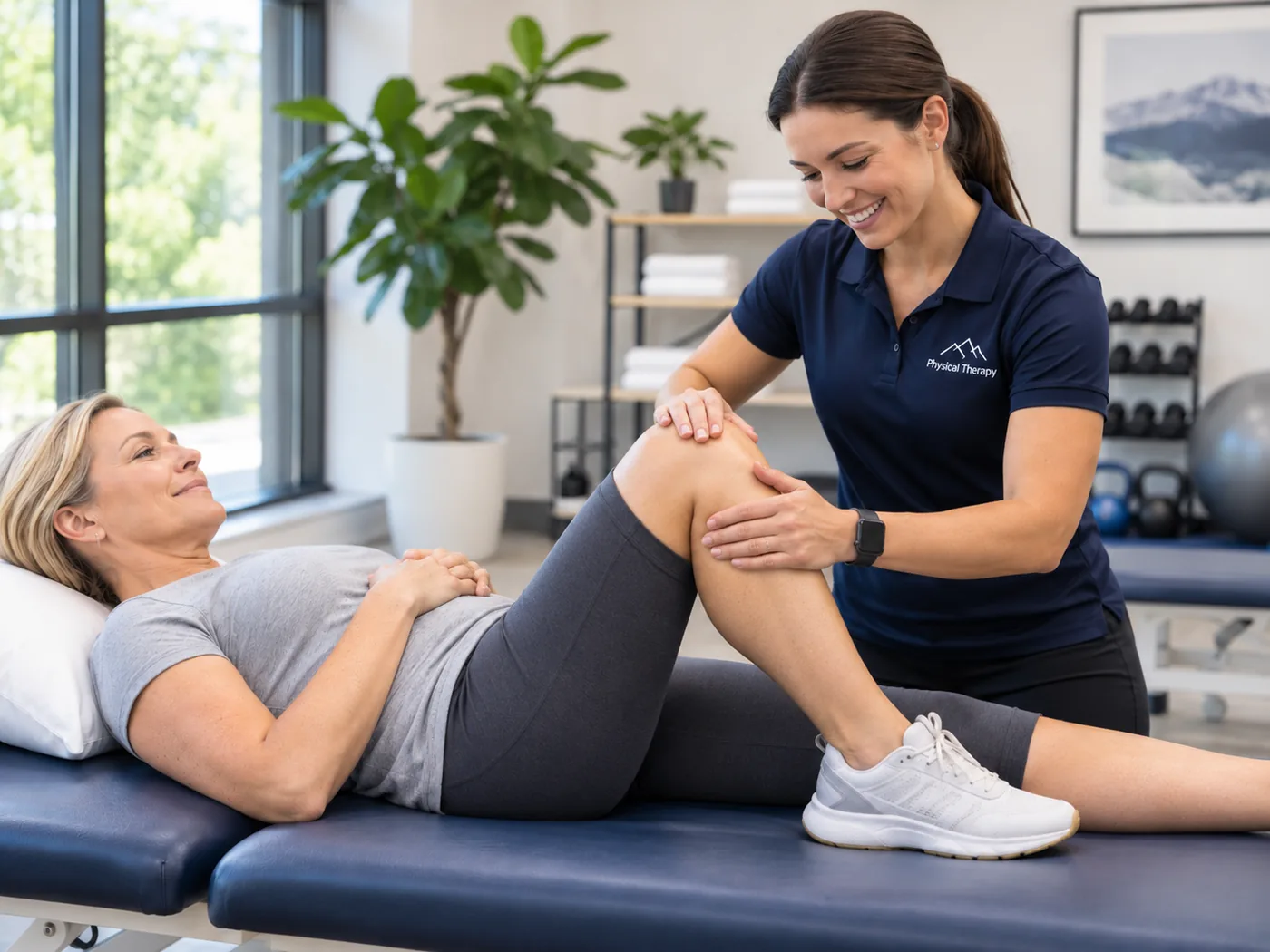
What is the best exercise for knee arthritis? The strongest recent evidence points to aerobic exercise, the steady, rhythmic kind that raises your heart rate. A 2025 review of 217 trials found it was most likely the most helpful single type for knee osteoarthritis pain, function, walking and quality of life. Strength, mind-body and mixed programs also helped, so consistency matters most.
If your knees ache on the stairs, stiffen after sitting, or complain on longer walks, you have probably heard two opposite pieces of advice: rest the joint, or keep it moving. Research has favored movement for years. The newer question is which kind of movement helps most, and that is where a large study published in the BMJ in 2025 adds useful detail.
What the 2025 research on exercise for knee arthritis found
The study was a systematic review and network meta-analysis by Yan and colleagues in the BMJ. That means the researchers gathered every randomized controlled trial they could find and compared the results, including indirect comparisons between exercise types that were never tested head to head.
Here is what they looked at:
- 217 randomized controlled trials with 15,684 participants who had knee osteoarthritis.
- Six types of exercise: aerobic, strengthening, flexibility, mind-body (such as tai chi or yoga), neuromotor (balance and coordination work) and mixed programs.
- Comparison: each type of exercise against control groups.
- Four outcomes: pain, physical function, gait performance (how well people walk) and quality of life, measured at about 4 weeks, 12 weeks and 24 weeks.
The main finding, rated moderate certainty, was that aerobic exercise reduced pain at 4 and 12 weeks, improved function and walking at 12 weeks, and improved quality of life at 4 weeks compared with control. Across the analysis, aerobic exercise had the highest probability of being the most effective type. The authors concluded it is likely the most beneficial exercise modality for knee osteoarthritis.
Other types of exercise helped too. With moderate certainty, strengthening and mixed exercise improved function at 12 weeks, mind-body exercise improved function at about 4 weeks, and neuromotor exercise improved walking at about 4 weeks.
Is aerobic exercise better than strength training for knee arthritis?
Aerobic exercise came out on top in this review, but that does not make strength training a poor choice. Strengthening still improved function, and in everyday practice the two often work together. Stronger muscles around the hip and knee can make it easier to walk, cycle or climb stairs for longer, which in turn makes regular aerobic exercise more doable.
Aerobic exercise simply means continuous movement that gets your heart and breathing going a bit faster for a sustained time. For people with sore knees, common lower impact options include walking, stationary or outdoor cycling, swimming and water walking. The review compared broad categories, not specific activities, so it does not tell us that one of these beats another.
Is it safe to exercise with knee arthritis?
This is one of the most common worries we hear. In the review, safety data were reported in only 40 of the studies, about 18%. Within those, there were no clear differences in problems between the exercise groups and the control groups.
That is reassuring, but because so few studies reported safety, it is not the final word. A sensible approach is to start at a level that feels manageable, increase gradually, and pay attention to how your knee responds over the following day. Some mild, short lived discomfort during or after exercise is common with arthritis. Pain that keeps building, new swelling, or a knee that locks or gives way is worth getting checked.
What the study can and cannot tell you
A few limits are worth knowing:
- Some comparisons are indirect. A network meta-analysis estimates how exercise types compare even when trials did not test them side by side, which is useful but less certain than a direct comparison.
- Longer term evidence was weaker. At 24 weeks, most of the findings, including the function benefit for aerobic exercise, were rated low certainty. Fewer trials followed people that long.
- Safety was under reported, as noted above.
- Results are averages. A study of thousands of people cannot tell you which program fits your knees, your other health conditions, or your goals.
How to start exercising with knee arthritis
Based on this evidence, a practical plan for many people looks something like this:
- Pick an aerobic activity you can repeat. Walking, cycling or pool exercise are common starting points. The best choice is the one you will keep doing.
- Start below your limit. Begin with a duration that leaves your knee feeling about the same or better the next day, then add a little time each week.
- Add strength work. Exercises for the thigh and hip muscles support the knee and help with daily tasks like standing up from a chair.
- Keep it going. The clearest benefits in the review appeared within about 12 weeks, and the longer term evidence was thinner, which is one more reason to treat exercise as a habit rather than a short fix.
A physical therapist can help you choose the right mix, adjust exercises that aggravate your knee, and progress safely. At Therahand Physical Therapy, we build these plans for people with knee pain and arthritis at our clinics in Aurora, Thornton and Wheat Ridge, Colorado, and no referral is needed to get started.
The bottom line
The best exercise for knee arthritis, according to the largest recent review, is most likely regular aerobic exercise, with strengthening, mind-body and mixed programs also offering real benefits. Starting gently and staying consistent matters more than finding a perfect routine.
Every knee is different, so talk with a licensed physical therapist or your physician about what is right for your situation.
Sources
- Yan L, et al. “Comparative efficacy and safety of exercise modalities in knee osteoarthritis: systematic review and network meta-analysis,” BMJ, 2025. https://doi.org/10.1136/bmj-2025-085242
This article is for general education and is not a substitute for an evaluation by a licensed clinician. If you have pain that is new, severe or getting worse, contact one of our clinics.